
7 Signs Your Home Needs a 200-Amp Panel Upgrade
· By Alexandre Afonso
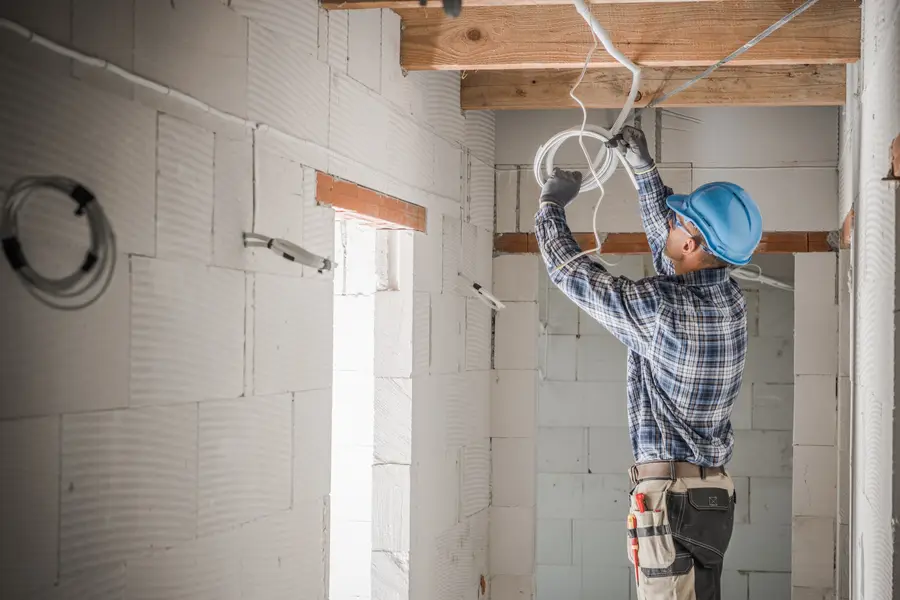
Your electrical panel is the heart of your home. It takes the power coming in from the street and splits it into the circuits that run your lights, appliances, heat, and everything you plug in. When that panel was sized for a home built in the 1950s or 1970s, it was never meant to carry a modern electrical load: an induction range, a heat pump, a hot tub, a home office, and an EV charger in the driveway.
Many older homes in Greater Boston still run on 60-amp or 100-amp service. That was fine decades ago, but today it can leave you tripping breakers, running out of circuit space, and quietly stressing wiring that was never designed for the demand. A 200-amp panel is now the practical standard for a full-size home.
Below are seven signs that point to a panel that is undersized or aging out. If you recognize a few of these, it is worth having a licensed electrician take a look. Because our electrical work is done in-house rather than subcontracted out, the same team that inspects your panel can plan and complete the upgrade, which keeps the timeline and the accountability in one place.
1. Breakers trip often, or you still have a fuse box
A breaker that trips now and then is doing its job. A breaker that trips every time you run the microwave and the toaster together is telling you the circuit, or the whole panel, is running at its limit. Frequent trips are one of the most common reasons homeowners call us to look at a panel.
If your home still has an old-style fuse box with screw-in fuses, that is an even clearer signal. Fuse boxes usually mean 60-amp or 100-amp service and wiring that predates modern demand. Many insurers now ask about fuse boxes, and some will not write or renew a policy until the service is modernized.
2. Lights flicker or dim when big appliances kick on
Notice the lights dip when the AC compressor starts, the dryer runs, or the well pump cycles? That momentary sag means the panel is struggling to deliver enough current across everything at once. On a properly sized 200-amp service, those loads have the headroom they need and the lights hold steady.
Occasional flicker during a storm is normal. Flicker that happens like clockwork whenever a specific appliance turns on is a load problem worth investigating.
3. You are out of circuit space
Open your panel door. If every slot is filled, or you see two thin breakers crammed into a single slot (called tandem or "cheater" breakers), you have run out of room to add circuits safely. That matters the moment you want a dedicated line for a new range, a basement finish, or a garage.
A 200-amp panel typically comes with far more spaces than an older 100-amp box, so you get both the capacity and the physical room to grow. If we are already planning a remodel with you, adding those circuits during the panel upgrade is far cheaper than opening walls again later.
4. You rely on power strips and extension cords
If half your rooms run off power strips and daisy-chained extension cords, that is not a wiring style choice, it is a shortage of outlets and circuits. It is also a real fire risk when high-draw devices share an overloaded cord.
Adding the outlets and dedicated circuits you actually need usually starts at the panel. If the existing service is already maxed out, the upgrade to 200 amps is what makes those additions possible.
5. You are planning a remodel, addition, or new major appliance
This is the sign homeowners miss most often. A kitchen remodel with an induction range, an addition, a finished basement, a heat pump, or a hot tub all add serious load. Adding several of them to a 100-amp panel is like adding lanes of traffic to a one-lane bridge.
When we scope a remodel, we look at the panel first. It is far more efficient to upgrade the service as part of the project than to discover mid-build that the panel cannot support the new layout. That coordination between the general contracting and the electrical crew is one advantage of keeping both under one roof.
6. Warm panel, scorch marks, or a burning smell
A panel cover that feels warm to the touch, discoloration or scorch marks around breakers, or any burning or fishy smell near the panel are urgent. These point to loose connections, overheating, or failing components, and they are a genuine fire hazard.
If you notice any of these, stop using the affected circuits and call a licensed electrician right away. This is not a wait-and-see situation.
7. The panel is an old or recalled brand, or just very old
Certain older panel brands are widely known in the trade to have breakers that may not trip reliably under a fault. If your panel is one of these, replacement is strongly recommended regardless of how it looks, because the safety issue is internal.
Even a panel that is simply 30 or 40 years old is worth evaluating. Components wear, bus bars corrode, and connections loosen over decades. A licensed electrician can tell you whether yours is aging gracefully or living on borrowed time.
What a 200-amp panel upgrade actually involves, and what it costs
A service upgrade usually means installing a new 200-amp panel, a new main breaker, and often a new meter socket and service entrance, then transferring and labeling every circuit. Most jobs require a permit and a coordination visit with the utility to reconnect the upgraded service, and the work has to pass a Massachusetts electrical inspection.
Costs vary widely with the condition of the existing service, whether the meter and mast need replacing, and how the panel is accessed, so any honest number has to come from seeing the home. Most panel upgrades in the Greater Boston area fall into a typical market range for this kind of work, and the way to get a real figure is a free on-site estimate. We give you a written scope and price before anything starts, with no surprises once walls or covers come off.
Frequently asked questions
- How do I know if I have 100-amp or 200-amp service?
- Look at the main breaker at the top of your panel. The number printed on it (100, 150, 200) is your service size. If you have a fuse box instead of breakers, you almost certainly have 100-amp or smaller service. A licensed electrician can confirm it in a few minutes during a free estimate.
- Do I really need 200 amps, or is 100 enough?
- It depends on your load. A small home with gas heat and few large appliances may be fine on 100 amps. But once you add electric or induction cooking, a heat pump, an EV charger, or a big remodel, 200 amps is usually the practical standard. We size the upgrade to what your home actually needs, not a one-size number.
- How long does a panel upgrade take?
- Most residential 200-amp upgrades are completed in one day, though your power is off for part of it while the panel is swapped and the utility reconnects the service. Permitting and scheduling the utility can add lead time before the actual work day.
- Do I need a permit for a panel upgrade in Massachusetts?
- Yes. Electrical service upgrades require a permit and a municipal inspection, and the utility has to be involved to reconnect the upgraded service. As a licensed electrical contractor we pull the permit and handle the inspection and utility coordination for you.
- Is a warm electrical panel dangerous?
- A panel that is warm to the touch, shows scorch marks, or gives off a burning smell can indicate loose or overheating connections and is a fire hazard. Stop using the affected circuits and call a licensed electrician right away rather than waiting.
- Why hire a contractor that does electrical in-house?
- Because the same team that inspects your panel can plan the upgrade, coordinate it with any remodeling work, and stand behind the result. There is no finger-pointing between a general contractor and an outside electrical sub, and the scheduling stays under one roof.
Related services
Found this helpful? Make us a preferred source on Google.
Ready for an exact price?
Get a free, no-pressure in-home estimate. Real numbers for your home, not a phone guess.